

Joy
What the poets know

Dear Dharma friends,
We are all on a spiritual journey, whether we know it or not. We’re on a journey towards wholeness.
In Tibetan Buddhism we say that every human alive has wisdom. We call it Buddha nature. If we can relax and open, our wisdom nature shines forth. Isn’t that nice? From the Tibetan Buddhist perspective, the spiritual journey is about allowing our heart/mind to come forward. It is really not that complicated.
Of course we could also be on a journey of denying our Buddha nature. That is its own kind of spiritual journey. Buddhism isn’t dualistic. There is no “descent into evil.” There is the idea that for whatever reason, like karma, people’s causes and conditions might not be in place for them to fall open. They may even be committed to getting more constricted!
I just returned from my first long retreat in a decade. One thing my teacher Anam Thubten said there was, “The more self-centered we become, the more painful it is.”
I thought that was so compassionate. It made me swoop right into the body of people I consider to be self-centered. Oh yeah, I remembered. Constriction is uncomfortable.
It takes guarding. The more you guard, the more you have to guard. Any chink could let discomfort in.
The inverse of what my teacher said is that the more open we become, the more easeful we feel. This stands up to my lived experience. By that logic, it’s beneficial to others if we’re open, and it benefits ourselves. It will feel better in our bodies to stop guarding our wellness, our ego, our optimized little life.
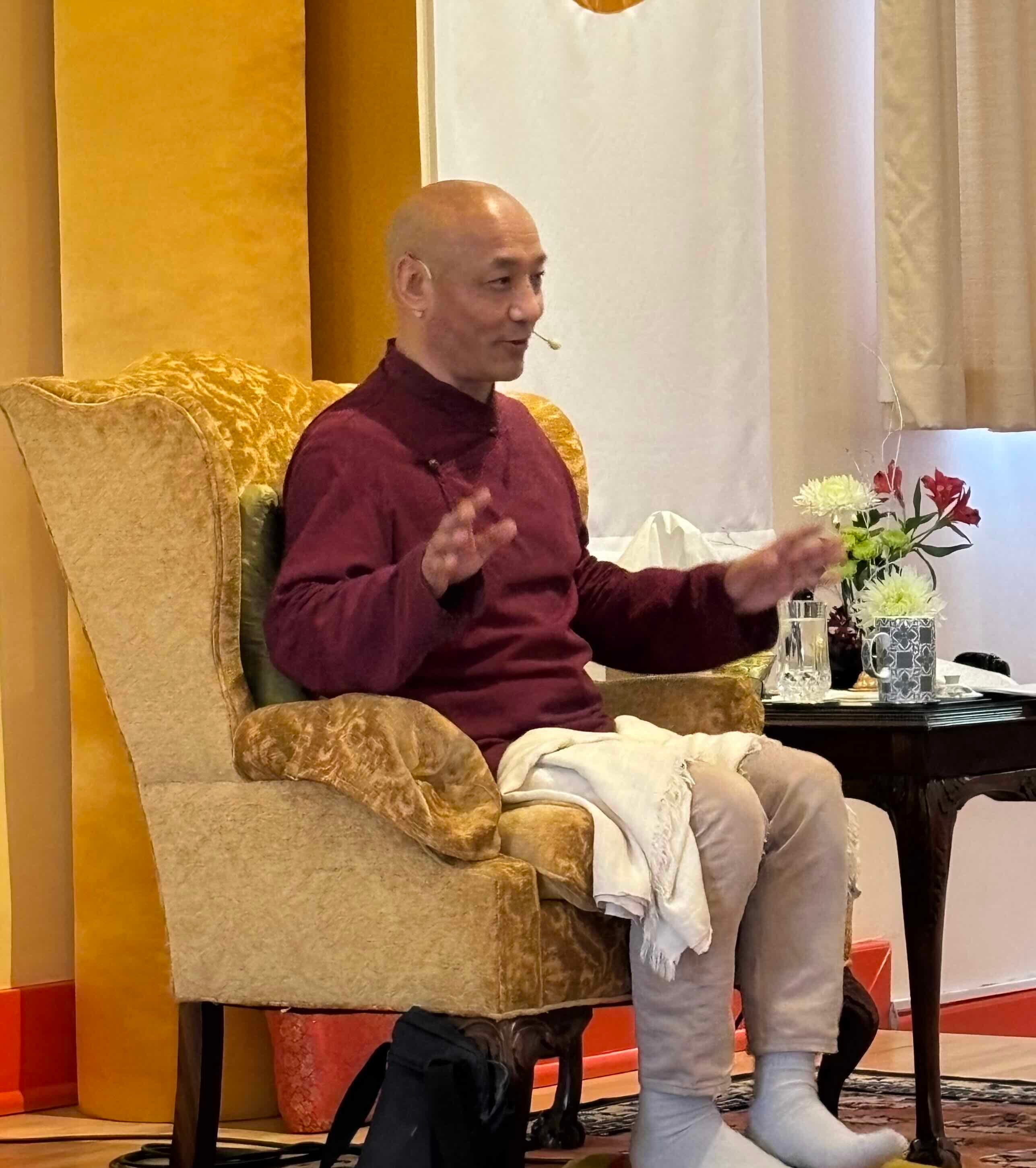
[Anam Thubten teaching retreat]
We can imagine that bodhisattvas are very open! They experience freedom by practicing the transcendent intentions: friendship, balanced view, compassion and the subject of today’s talk, joy.
I am a porous mama. Pretty much every dharma talk I give, I cry. The tissue box gets a workout. Some sangha members cry with me. It’s great. Sometimes taking the balanced view united with a heart on fire with compassion can lead to a lot of crying.
Even Avalokiteshvara, the bodhisattva of compassion, fell down in exhaustion. That’s how he got 1,000 arms and eleven heads. He needed more limbs to tend to the suffering of the world.
Luckily, just as we are called to witness the world’s suffering, we are also called to witness its beauty. When we witness beauty, we experience joy, which is the last of the transcendent intentions: mudita.
We are alive
The first reason to feel joy is because we are alive. To be alive is a gift. Ask anyone who’s aging. Often it’s only as we leave the world that we realize how wonderful it has been to walk in it.
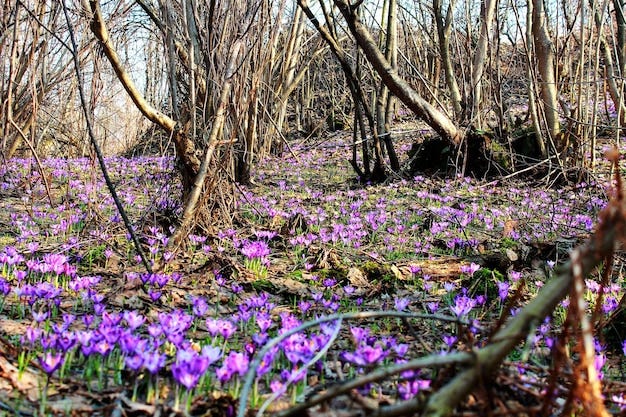
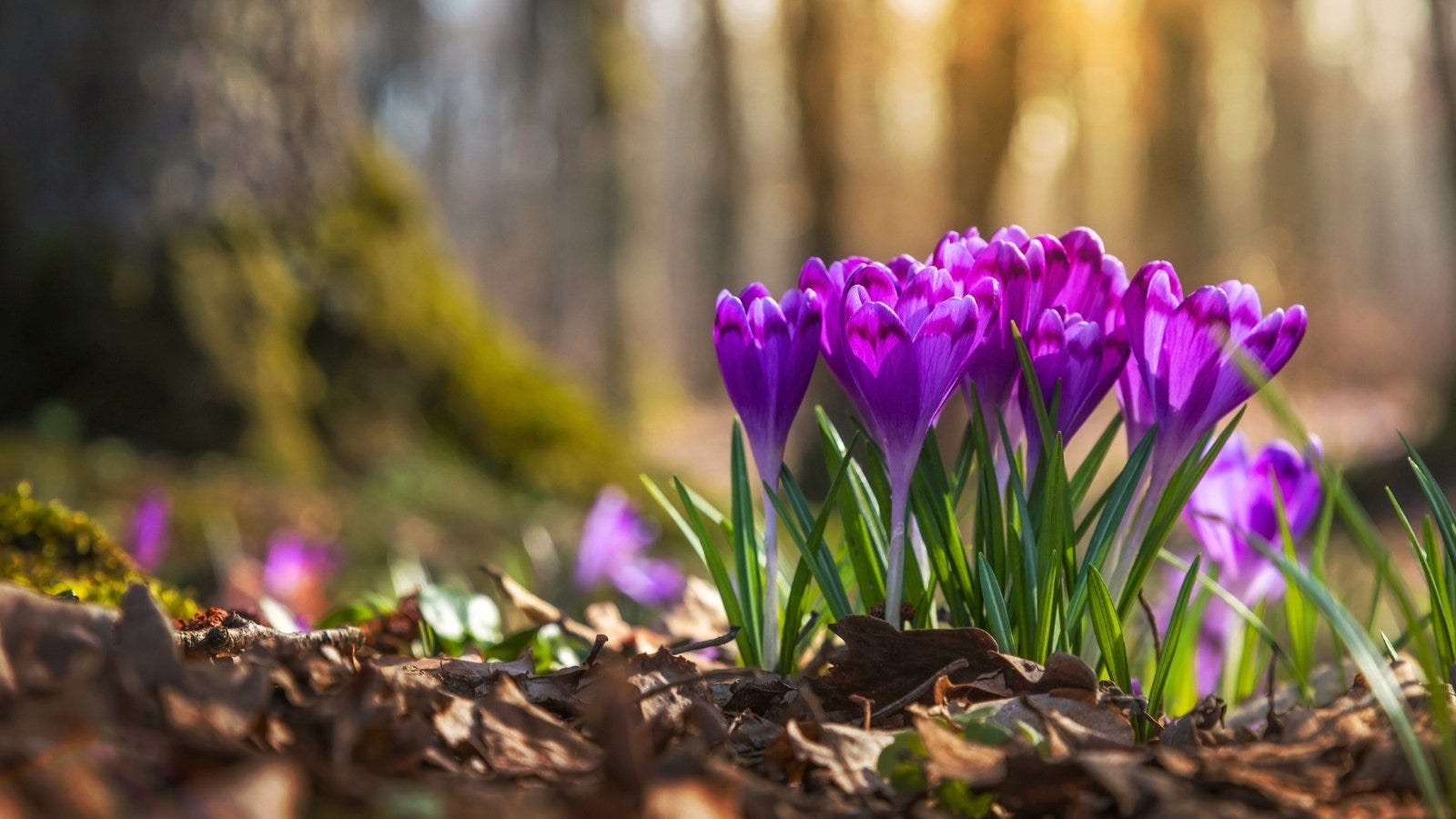
In Philadelphia in the last few days the crocuses and snowdrops have popped out of the hard brown soil. Before I moved here, I only knew crocuses from Joni Mitchell’s Little Green. I’d moved from California, and I grew up in Thailand.
I can now say that I am a true fan of the crocus. I am happy to be able to walk my brother, who just landed from Bangkok, into the forest to take in the carpet of little purple points. I find the sight of crocuses hopeful. Like everyone else, I am ready for the flowers after winter.
The great Potawatomi botanist and writer Robin Wall Kimmerer has this to say about strawberries:
In Potawatomi, the strawberry is ode min, the heart berry. We recognize them as the leaders of the berries, the first to bear fruit.
Strawberries first shaped my view of a world full of gifts simply scattered at your feet. A gift comes to you through no action of your own, free, having moved toward you without your beckoning. It is not a reward: you cannot earn it, or call it to you, or even deserve it. And yet it appears. Your only role is to be open-eyed and present. Gifts exist in a realm of humility and mystery— as with random acts of kindness, we do not know its source.
Joy is the dignified way to acknowledge a gift.
We are human humans
The second reason to experience joy is because we are human.
In Buddhism it’s said that the human realm is the perfect one to become enlightened. We have just enough suffering to be motivated, and just enough circumstances to practice.
Contrast this with the animal realm, which I think of psychologically. That is a person without food or shelter, who lives within the animal orientation to safety. Saying to such a person that they should meditate and find wisdom would be callous.
How about the god realm? I think of this as the billionaire class. They have the circumstances to experience almost no suffering, bypassing airport delays with private jets, and grey winter months with private islands. The teachings say the god realm is consumed with jealousy. This is a hindrance. Gods don’t have enough suffering to motivate them. They are also cut off from everyone else. Notice how many times I had to use the word “private” to describe the human-gods. If your happiness and even your safety comes from keeping so many resources private, you are probably also cutting off your connection to humanity.
So this human-human life where we have shelter, food, and the teachings, is gift. It is the perfect place to practice and transform. We can feel the joy of such auspicious circumstances.
There is joy in abundance
Mudita is often translated as sympathetic joy. That is the ability to be happy for someone else. Mudita is said to be the hardest of the transcendent intentions to practice, which is why we teach it last.
Isn’t that funny that being happy for someone, which means not being jealous of them, is the hardest?
It isn’t hardest to witness the suffering of the world. It is not hardest to find your big, compassionate heart. It isn’t hardest to be in friendship with yourself and others.
I think of mudita as a litmus test of the heart. If your heart is open, it isn’t hard at all to be happy for someone else. It’s when we’re living in a scarcity mindset that mudita becomes tricky. So Mudita involves the cultivation of a mindset of abundance.
As in, there’s abundant enlightenment to go around! My enlightenment does not take away from yours. There is abundant happiness to go around! Your happiness does not take away from mine.
This is a big teaching. Cultures that are joyful are catching. Cultures that support one another’s happiness are a delight to live in. These are the cultures where our children will thrive.
To step into our wisdom self is to say: I am present, I am alive, I have the means to practice, and I am here for the joy. I even support you in your joy.
We all belong
Look, it’s a scary time in the world. I get why we might feel the need to guard right now. The impulse is to close in to our tribe, deeming our friends and family worthy and those outside unworthy.
That word, “worthy,” gives me a headache. Encoded in English are the assumptions of sin, redemption, judgement. It’s like we’re placing people on a scale: Are you worthy? Yes/ no
We are worthy because we’re alive. There is no other measure. We cannot cast anyone alive out of “worth.” As Anam Thubten said on this retreat, “It’s easy to take away someone’s divinity. That is a form of ignorance.”
On this retreat, some of the people I was with had little pins on their lapels to indicate levels of spiritual training. The pins also indicated belonging to a certain sangha.
I get it. We all want to belong, myself included. It is a primal driving instinct. The key word here is that it is primal. We need to rise above such instincts. They may be human, but they are not wise.
The pins reminded me of a moment in Thailand in the 1970s when “true Thais”— the worthy ones!— were given pins of the King and Queen. Good patriots had pins. It was a visible way to delineate who was in and who was out.
This became part of a larger campaign to cast young Thai people, who were radicalizing for democracy, as out. When an uprising occurred in 1976, these young people were massacred by their fellow citizens. These kids didn’t have the right… pins.
There have been moments in history, and this may be one of them, when the line of who is inside and who is outside the circle of our heart gets very delineated.
Here is the thing: the spiritual journey includes every person alive. Buddha nature is in every human being, whether they are falling open or doing their very best to close off.
To be human is to belong as part of the life force swirling through each and every one of us. That’s why it is imperative that no one is put outside the circle of our transcendent intentions. We want to try to hold our hearts so that no one is outside our willingness to be in friendship, equanimity, compassion and sympathetic joy with them.
We may as well all vow to become bodhisattvas, because we are intimately connected already. We live in one atmosphere, that can swirl with wildfire smoke— or not. With American funding cuts in public health, tuberculosis is on the rise in Kenya. One person’s cough in East Africa could very well affect us in the United States. To hold the intentions of a bodhisattva is to acknowledge the simple truth that we are in this together.
On retreat, I got worried about delivering this dharma talk right after I landed back home to exhausted husband, toddler with fever, and boy who needed to Talk At Mom. How was I going to manage it?
I managed because in one of the teaching sessions, Anam Thubten spontaneously gave a talk on joy. The universe can work like that. Another gift.
Anam Thubten said that joy was living with Mary Oliver’s eyes. I leave you with Mary Oliver’s poem Mindful, courtesy of our lineage delivering this talk into your lap.
Joy is what the poets know.
Love,
Sunisa
Mindful

Every day
I see or hear
something
that more or less

kills me
with delight,
that leaves me
like a needle

in the haystack
of light.
It was what I was born for -
to look, to listen,

to lose myself
inside this soft world -
to instruct myself
over and over

in joy,
and acclamation.
Nor am I talking
about the exceptional,

the fearful, the dreadful,
the very extravagant -
but of the ordinary,
the common, the very drab,

the daily presentations.
Oh, good scholar,
I say to myself,
how can you help

but grow wise
with such teachings
as these -
the untrimmable light

of the world,
the ocean's shine,
the prayers that are made
out of grass?

- Mary Oliver
Meditate with me
Heart Sangha has been meeting in person in Philadelphia PA, but we are transitioning to a Zoom mandala.
Sign up for Heart Sangha emails for practice opportunities when you can sit with me and hear these teachings live.
Beautiful post! Thank you for sharing your wisdom, and your joy with us :)