

How to Practice
Chod edition

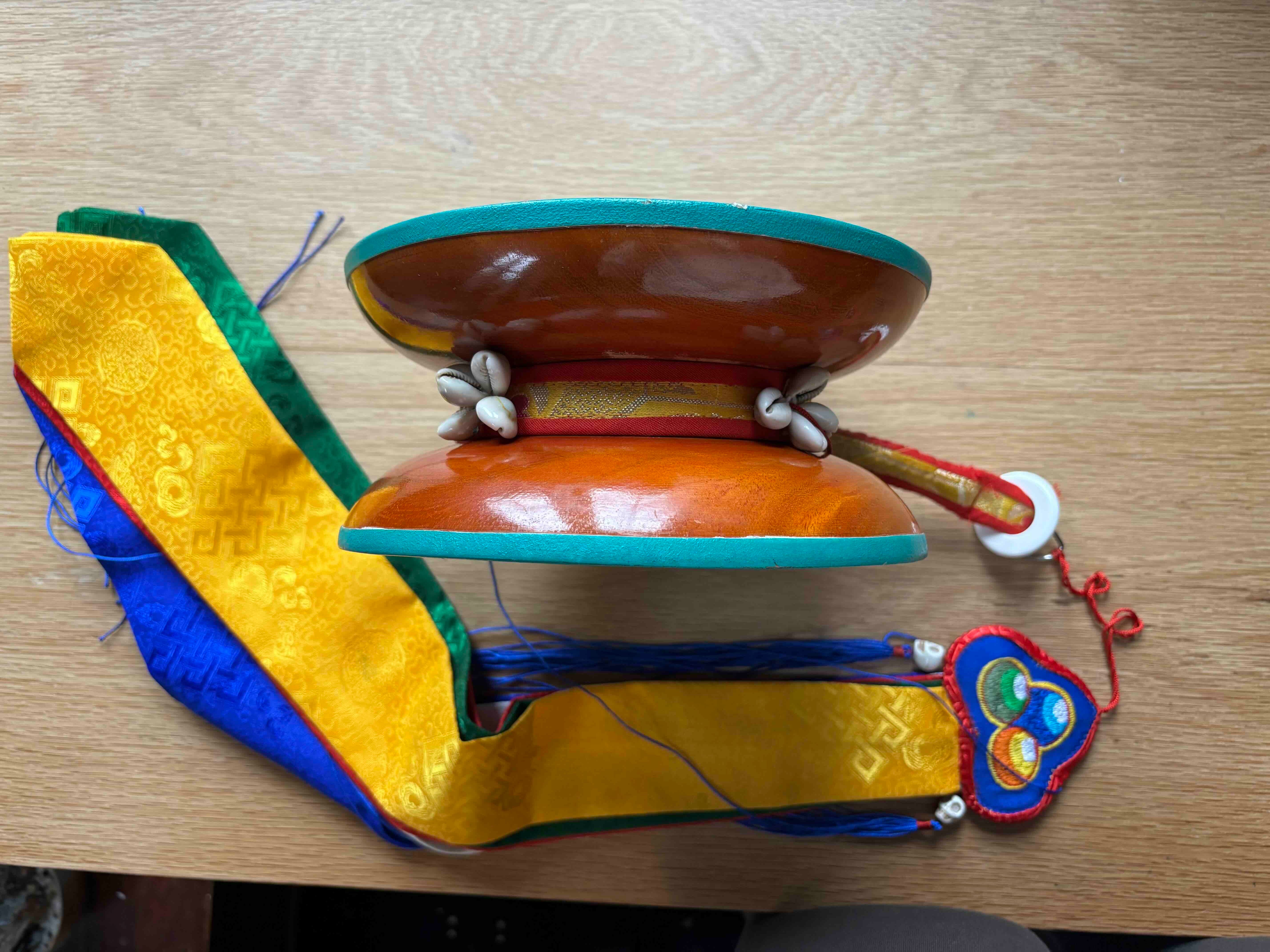
[A damaru, the double-sided drum of Chod.]
Dear dharma friends,
Welcome to 2026.
Someone asked today for my definition of spirituality. Such a good question! To me, spirituality is a lived ethics. In short, the dharma. A deep and honest inquiry into how we should live our life.
We ended last year with a summary of the path of the dharma. There are many dharmas, and many specifics, but sometimes it’s nice to have a few steps to follow. That was How to Practice, General Edition.
Here is the next iteration: a specific look at the way that Chod re-orients us from our habitual stuck-ness and patterns of contraction, into a more expansive way to live now.
Prajnaparamita, from head to heart (to belly?)
The wisdom of emptiness teaches that there is no self to the self-cherishing, no “I” that needs protecting. Many of us recite the Heart Sutra to start to taste emptiness. Mahamudra and other analytical meditations help us deconstruct our cherished dualisms. Chod brings the wisdom of the prajnaparamita into the body, to change how our body reacts.
Why worry about reactivity?
The holiday season arrived with a shooter at my alma mater, Brown. Two students were killed as they studied for their finals, and more hospitalized. Today there is a debate about what happened in Minneapolis when ICE agents shot and killed Renee Nicole Good. The society we’ve built of reflexive over-protection is madness. We are experiencing its toxicity.
We are so quick to defend ourselves. We are quick to hold our bodies as precious, and other lives as not. We are quick to perceive danger, whether the danger is happening or not. This egoic habit is in all of us.
There’s a difference between self-defense and the prickly, over-reactive wham! Fire the gun. Shove the person. Unleash hateful words. Many of us are exhausted by living in this unconscious society. But how do we actually change the impulsive reaction our bodies make to defend? With Chod, a Tibetan Buddhist dharma.
Here is a brief overview of the way Chod re-orients us away from our habitual patterns.
1. Find Safety
Chod is Tibetan Buddhist trauma-healing protocol that transmutes personal, collective, and ancestral karma. To do anything that big, we must first ground ourselves in safety.
We take refuge in the Buddha, Dharma and Sangha, if that’s in our wheelhouse. We call on healed ancestors to support the work. We build our devotion to a living lineage of enlightened energy that can bring blessings, adishtana. That must be how we begin.
2. Approach What Your Fear
Machig Lapdron originated Chod in the 11th century in Tibet. She said to approach anything you fear. In the West we say, “face your fears.” In Chod, we go towards them. Machig didn’t mean to go jumping off cliffs, but to use samsara’s operating system to liberate ourselves.
All of us live pulled between hope and fear. Fear can seem solid, eternal, real. When we go towards fear and then through it, we experience how fear is impermanent. Fear is empty of substance. Fear is empty of fear. This is a big thing for our bodies to encounter. It isn’t enough to do this in the mind.
In Tibet, Chodpas used to practice Chod in a charnel ground, a burial ground. We can imagine meditating among bones and bits of muscle and sinew, the stench of human decomposition filling our noses. Meditating in a charnel ground calls up our aversion for sickness and our fear of death. Approach what you’re afraid of.
In Thailand, I am told that Ajahn Cha had novice monks spend their first night meditating alone in a forest. This makes me laugh and cry, because that is wildly scary to a Thai person. Being alone, in nature, in the dark? We believe in spirits and ghosts! We are good at making horror movies! Ajahn Cha was masterly with his instruction, because to survive a night in the forest, a novice monk would have to cut through fear.
What Ajahn Cha realized is that cutting through fear and the ego of our self-cherishing is a direct path to awakening.
3. Cut Neurotic Patterns
Many of us have spent years in therapy. We probably have a good understanding of our family of origin and the stuff we’re carrying into adult life. We might even know something about our ancestral baggage.
What then? There’s a balance between needing to see, and how we can reify, make concrete, the very stories that trapped us. When we reify our trauma, it becomes more engrained in our bodies because we have unconsciously begun to cherish them. We have made it a thing.
Chod takes our human tendency to create narratives and uses it to liberate us. In Chod ceremony we anthropomorphize our suffering into "demons, Machig’s term, or parts, as Internal Family Systems calls them. This allows us to see the suffering clearly. It’s important we do that.
We see the suffering we carry as beloved demons. And then we call in our safety, our enlightened refuge, and our Buddha Nature—what IFS calls Self—to cut through the demons. Even our demons are empty.
We do this with love and compassion, tenderness and understanding. We stop indulging our neurotic patterns.
Offer the Body
We cut our neurotic habits not conceptually, but in the body. The radical part of Chod is that we offer our body to our demons.
In Chod ceremony we visualize our own cherished body as a feast for demons. So today, I would visualize Sunisa, wearing a navy button-down shirt tucked into jeans, and long brass earrings, in size as big as a universe. I would lay myself out as concretely and literally as I can visualize in the meditation.
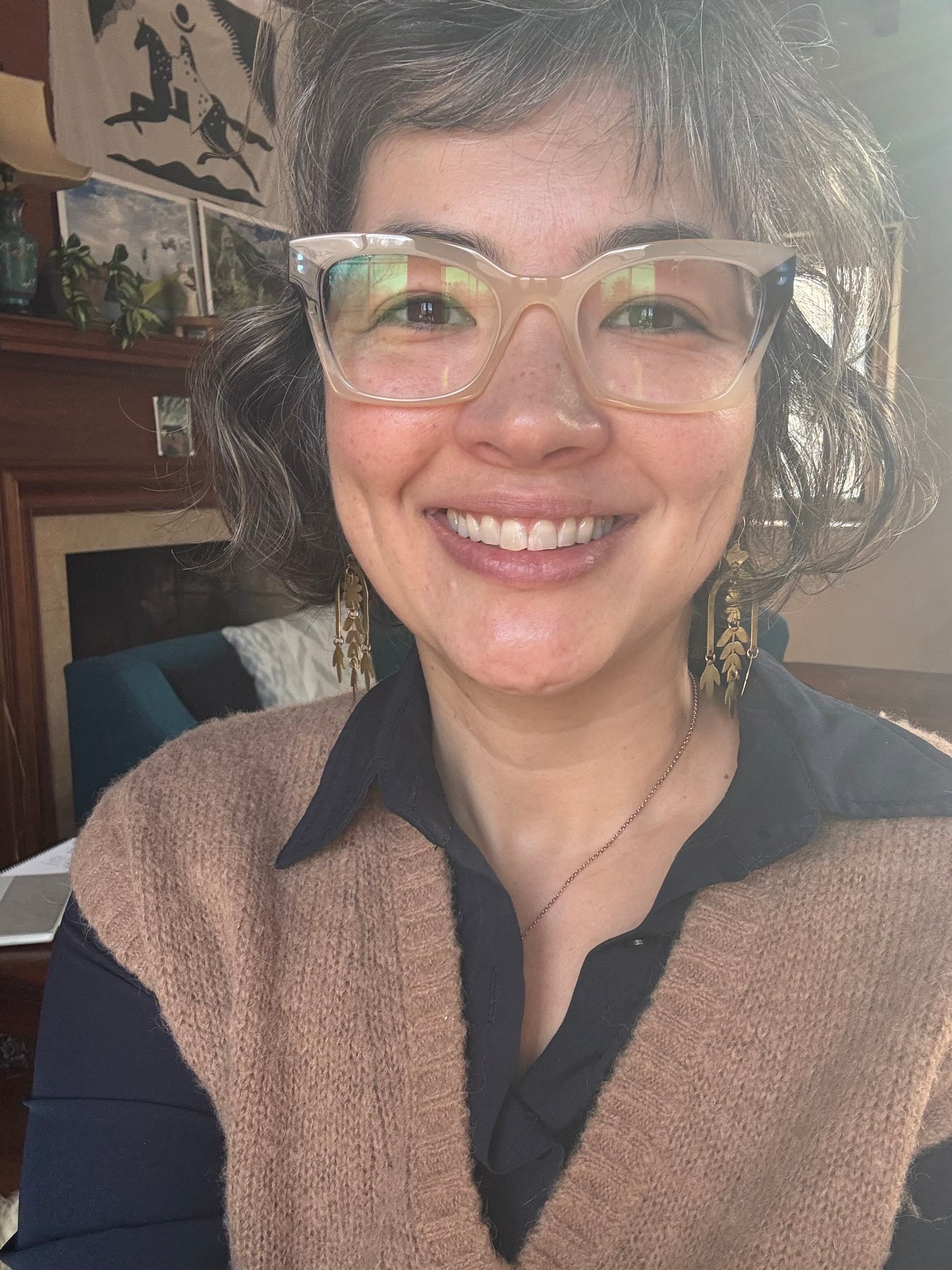
[A yummy body offering!]
Then in the ceremony where the demons arise, I picture the demon of self-cherishing eating me.
If you are really offering your body in meditation, the ego struggles. It thrashes. It OBJECTS.
(Sample inner explosion: what the f—- crazy-ass ritual are you doing— it is a CULT —we are going to DIE— WHAT ARE YOU DOING GET OUT).
That is the point. You let the ego die.
For me, the demon of self-cherishing looks like me but shinier— diamonds and fancy handbag, heels and slick hair.
She feasts on my body. And when she is sated she transforms into a softer, disheveled, tired-mom version of me. The one that has a looser relationship to “my” self. The one that has let something go.
The feast of the body is where the habit of over self-protection starts to fall away.
5. Grow Into Wisdom
When we stop indulging our neurotic tendencies, there is a spaciousness in our being that allows quite a lot else to rush in. We become capable of growing into our wisdom nature. This part doesn’t take effort. We rest. Buddha Nature manifests.
But we need the space that was filled with demons for this to be able to happen. In many ways, we are being filled with the buddha nature from our demon parts. There is wisdom in fear. There is love in anger.
Can you believe it? This is how Chod ceremony concludes.
Ways to Pursue Chod
I am summarizing a path that takes years to learn and inhabit. What I want to illustrate is the profound re-orientation that Chod can create. There is the usual practice path of the dharma, and it is good. And then there is this specific dharma lane.
Chod means severance. It is not for everyone. Looking at the neurotic patterns I carry has been an explosive and uncomfortable process. But Chod is powerful and direct. If you feel an exhaustion with samsara; if you have strong motivation; if you are ready to take responsibility for the stuff you have been hauling around; if you are an intense kind of person; if you are determined not to let your kids inherit the scorched earth of collective and ancestral pain; basically, if you read this and feel in your body that Chod might be your path, then—
Here are ways to pursue Chod:
I have outlined a path of Chod Healing, which cycles through all of Chod across 2 years, for non-Vajrayana practitioners.
At the end of February I am teaching a residential Chod Healing retreat at Menla in the Catskills. This retreat is focused on the transformation of poisonous emotions like hatred into their wisdom qualities. We’ll do all 4 feasts of Chod. We will be fed and housed. Menla is the right container to let all of the healing work of Chod take place. You might consider coming, if you think Chod could be your dharma lane.

You could donate to the scholarship fund for the Chod Healing retreat. Be part of someone else’s transformation. It is an expression of dana, transcendent generosity. Use this link and write “scholarship” in the comment box.
If you might want to learn the full, Vajrayana Chod, you begin with ngondro, the preliminary practices. I think of these as the gates to the Vajrayana. We are starting a ngondro group at Heart Sangha this spring. This is open to practitioners online. This option takes a strong commitment. Speak about this with me in a kalyanamitra. I would love to lead you in ngondro and then teach you Chod. For me this path has been one filled with intensity yes, but also joy, rapture, and transformation.
Thank you for reading. I wish you courage on the path, and the commitment to keep your tender heart open!
🙏🏼
Sunisa
Links
I teach live on Sundays from 10am- noon est at Heart Sangha in Philadelphia. All talks are broadcast on Zoom.
The full teaching calendar is here.
Thank you to everyone who has recently upgraded to support my work! Unexpected gift of the new year.
Could you like, re-stack, drop a comment or interacting in any way with this post, so people can find Dharma Bites?
Tricycle magazine published a personal essay I wrote about how I came to practice Chod.
I’m a one-trick pony: Chod is my path. I’m here calling anyone who wants to learn Chod to come dance. ❤️🔥
How beautiful, Sunisa. I'm not a one-trick pony, but (I guess) because I had extensive training in the Troma cycle from my lamas, Troma Chod is what has taken off for me in terms of establishing a steady committed group of practitioners. You know, people who do ngondro. In May this year we will be having a nine day retreat on the middle-length sadhana. These retreats (thirteen people or less) are indeed nail-biters financially, with a no-one-turned-away policy. But it has worked out for us. In my case people like to sponsor the food budget more than individuals. We have a great volunteer cook.